Republic of the Union of Myanmar — Authorized Personnel Only
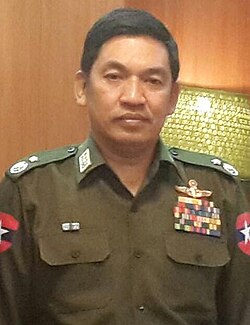
His Excellency U Nyo Saw — career officer, economic administrator and First Vice President of the Republic of the Union of Myanmar. A life of service rendered through institutions, planning and quiet authority.
U Nyo Saw is a Burmese statesman and former military officer who has served the Republic of the Union of Myanmar across the most consequential offices of national administration. Since April 2026, he serves as the Fourth First Vice President.
His career spans more than three decades of public service — encompassing military leadership, the chairmanship of one of the country's largest industrial enterprises, ministerial responsibility for national planning, and the office of Prime Minister. The thread connecting these mandates is a deep institutional discipline: the conviction that nations are built by the patient operation of structures, not the volume of declarations.
He brings to the Vice Presidency a distinctively integrated background — military, industrial, economic and governmental — uniquely suited to the demands of national coordination, strategic planning and the modernization of public administration.
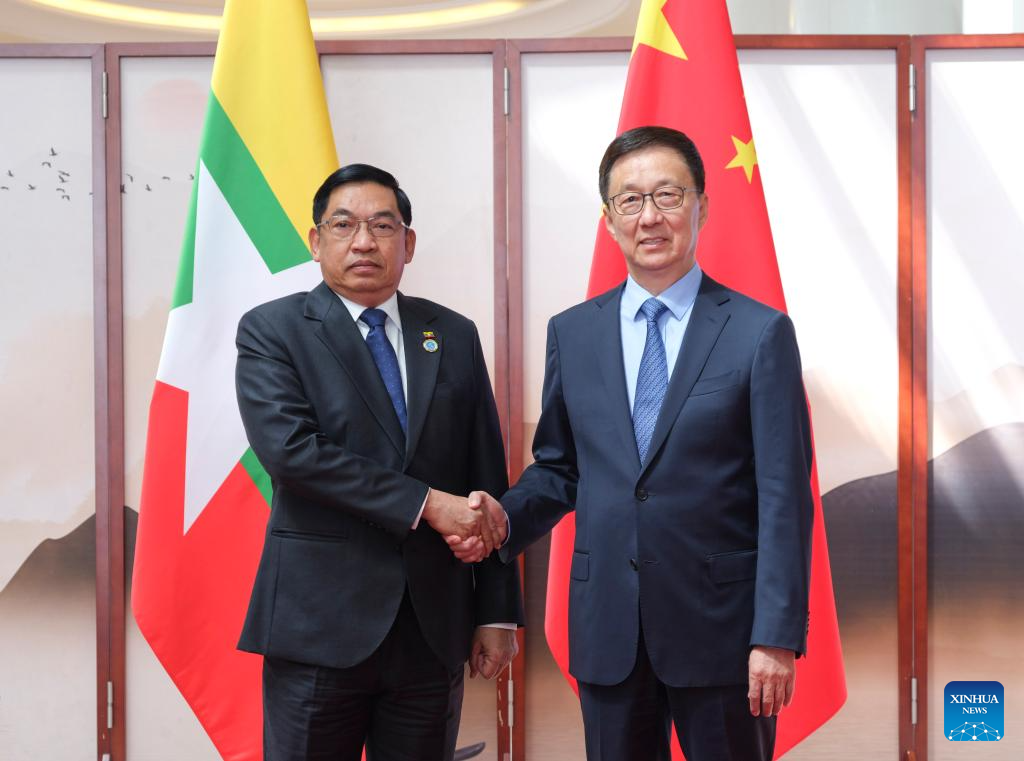
Each chapter of his career has prepared him for the next — the operational discipline of military service, the strategic leadership of national industry, and the cabinet-level command of the planning apparatus. The Vice Presidency consolidates them all.
Twelve-year stewardship of one of Myanmar's most strategic industrial conglomerates — overseeing manufacturing, infrastructure and resource sectors that anchor the national industrial base.
Service on the principal organ of national administration during a defining transitional period for the Union — economic stewardship, inter-ministerial coordination, institutional continuity.
Ministerial responsibility for national planning, investment frameworks, regional development priorities, employment programmes and macro-economic discipline.
Headed the Union government — coordinating cabinet, advancing infrastructure modernization and steering implementation of national priorities at scale.
A senior position on the body responsible for security policy and stability of the Union, contributing planning and economic perspectives to integrated national security thinking.
Sworn in as the Fourth First Vice President of the Republic of the Union of Myanmar — leadership across national planning, administrative coordination and institutional continuity.
"A republic is the sum of its institutions. To lead is to defend their integrity, to refine their performance, and to leave them stronger than you found them."
— His Excellency U Nyo Saw, First Vice President
In April 2026, U Nyo Saw was sworn in as the Fourth First Vice President of the Republic of the Union of Myanmar — assuming a constitutional office of senior leadership and national coordination.
The Vice Presidency carries a distinctive mandate: convening cabinet priorities, coordinating between regional and union government, leading on national planning, and providing institutional continuity in a moment of strategic transition. It is an office of quiet weight, suited to a leader of method and patience.
His appointment reflects the consolidation of a career devoted to disciplined national administration — and a recognition that the Republic's next chapter requires precisely the kind of integrated executive temperament he has built across military, industrial and ministerial life.
Outcomes follow from structures. Decisions are filtered through process, mandate and the legitimate authority of office.
Strategic patience over short-term acclamation. Capital, infrastructure and human development are work measured in decades.
The Union holds together through a balance of regional dignity and central coordination. Both must be cultivated continuously.
Decisions grounded in data, planning analysis and operational reality. Rhetoric subordinated to disciplined judgement.
The work of office is judged by results, not by volume. Public administration is a vocation, not a stage.
Office is held in trust. The measure of leadership is the strength of the institutions left behind for future generations.